

Kuala Sepetang formerly known as Port Weld is a coastal town located near Taiping, it was originally named after a former British Governor, Frederick Weld.
This coastal town which appears to be like any other coastal town in the country differs from the rest in that it has a rich history that goes back to the late 1800’s.

The first railway track in the country was laid here, although it was only a mere 12.8km linking Taiping and Port Weld. It played a very significant role at the time for the tin mining trade.
Taiping was the capital of Perak and centre of the lucrative Larut tin mining area, while Port Weld (now Kuala Sepetang) was an important port for steamers and trade vessels from Penang. The railway line was to become an important link for the export of tin to Europe and the United States.Construction of the line began in 1882 with two divisions of Pioneer Corps from Ceylon, the legacy of the Pioneer Corps from Ceylon can still be seen today with the Ceylonese Association building still present in Taiping town.
The line was opened to traffic on June 1 1882, apparently 60 years after the first railway line was opened between Stockton and Darlington in England.
Another interesting event I found during my search for more information on this historic railway line is that during the Japanese occupation, the rails was dug up to be used for the construction of the infamous Death Railway in Siam by prisoners of war.
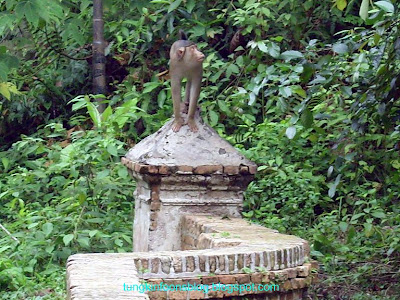
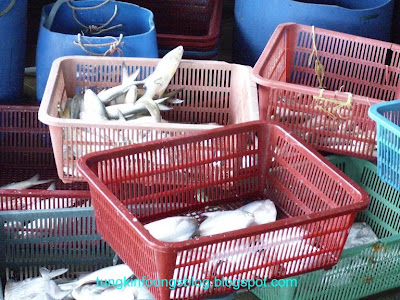
Sadly today, there is little evidence the line ever existed, the only prominent visible evidence that a train line ever existed here is an old stone sign written in four languages. Excellent fresh seafood can be gotten here and it has a seafood restaurant situated on the upper floor of a building overlooking the estuary where fishing boats disembarked and the day’s catch is unloaded and traded.
Seafood fresh from the sea.


The village is also very popular with its Curry Mee stall where the railway line used to run right beneath its concrete floor.
My brother in law and family having the popular Port Weld curry mee.


Kuala Sepetang currently has a thriving fishing community with charcoal making being the next
active economic activity.


 Ignoring the normal danger a person would face in our tropical rain forest, infested with snakes, poisonous frogs and the ever present irritating leech. But I find it fun!


 A cicada has large eyes wide apart on the head and usually transparent with well-veined wings. Around the world there are about 2,500 species of cicada, and many species have yet to be identified. Cicadas are found in temperate to tropical climates and are well known for their many varying sizes and acoustic talents.
 Cicadas do not bite or sting and are benign to humans and plants as such they are not considered as pests, although the loud clicking sound make by the male cicada to attract mates and while under threat can be quite deafening.

 Found near the entrance to the Bukit Larut water catchment area, next to a Hindu temple, it is occasionally given a good cleaning by a group of people I suspect to be from some historical society. Not withstanding the fact that it has come to be noticed by a group that matters, the lack of information about the bridge is surprising.


 Asking the few people I come across there on the historical background of the bridge, has drawn totally irritating and ignorant answers and I am being kind with my words. It appears to some people that history, heritage and culture have no bearings in life!